
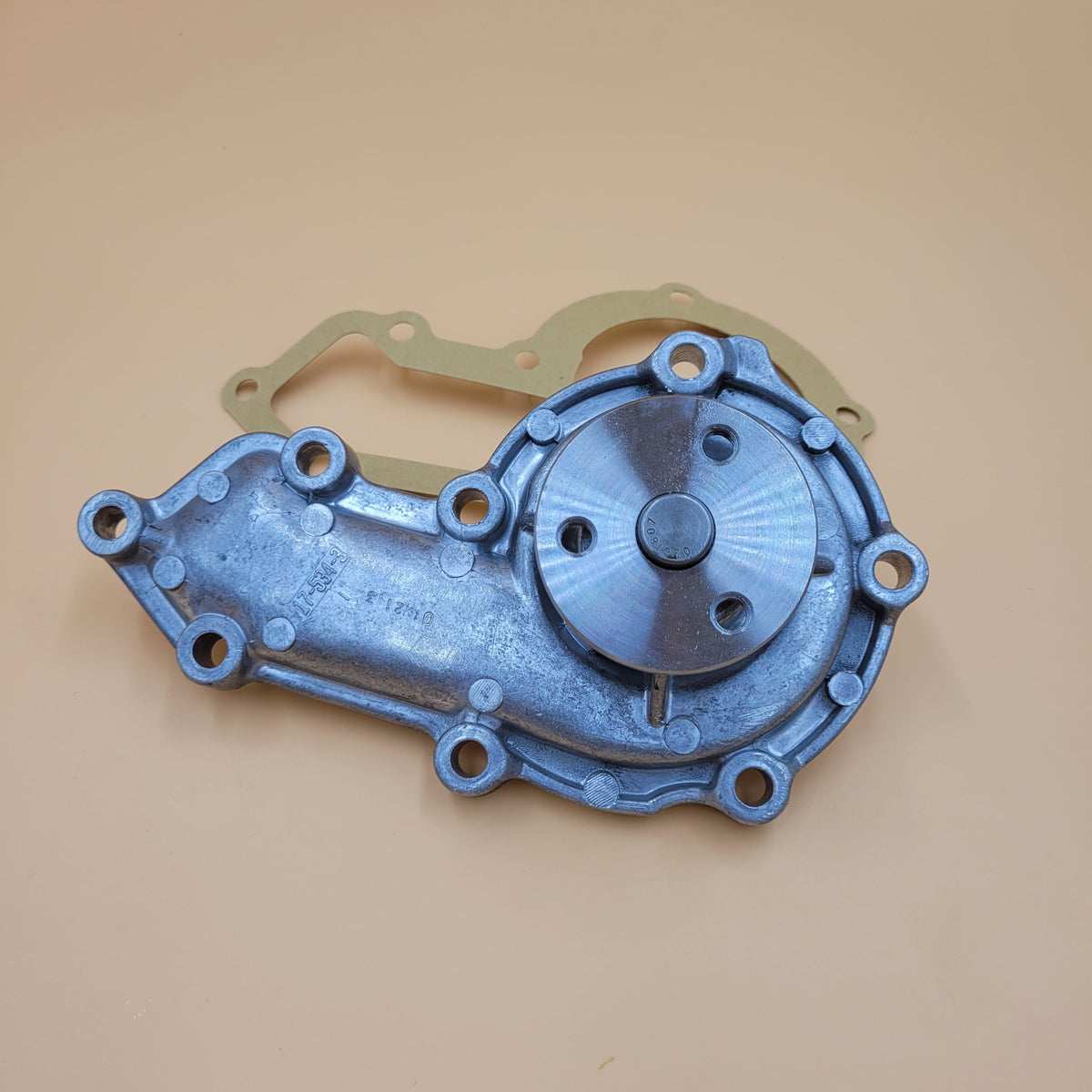
A failing water pump is one of the more common reasons a 300Tdi ends up on the back of a recovery truck. The good news is that it's a job most owners can do on the drive in an afternoon, with ordinary hand tools and no special equipment.
This guide follows the official Land Rover workshop procedure, and the torque figures below are the factory values.
How to tell your water pump is failing
- Coolant weeping from the weep hole, usually leaving a crusty pink or orange trail down the front of the block. This is the classic early sign and means the internal seal has gone.
- A rumbling or grinding noise from the front of the engine that changes with revs. That's the bearing.
- Play in the pulley. With the belt off, grab the water pump pulley and try to rock it. Any movement means the bearing is on its way out.
- Persistent coolant loss with no visible hose leak.
A pump that is weeping but not yet noisy will often run a while longer, but it rarely improves. It's cheap insurance to change it before it seizes and takes the auxiliary belt with it.
What you'll need
- A new water pump and gasket. Do not reuse the old gasket.
- Fresh coolant to the correct specification.
- Metric sockets and spanners, and a torque wrench.
- A drain pan.
Removing the old pump
- Disconnect the battery.
- Drain the cooling system.
- Remove the radiator top hose.
- Remove the intercooler top hose.
- Slacken the water pump and power steering pump pulley retaining bolts. Do this while the belt is still on, so the pulleys can't spin.
- Remove the auxiliary drive belt.
- Unscrew the flange nut and remove the belt tensioner.
- Remove the oil filler cap and the rocker cover insulation.
- Slacken the retaining clip and disconnect the hose at the heater rail.
- Unscrew the three bolts and remove the water pump pulley.
- Unscrew the three bolts and remove the power steering pump pulley.
- Remove the eight bolts securing the water pump, noting the location of the three through bolts into the cylinder block. They are not all the same and they need to go back where they came from.
- Withdraw the pump and gasket from the auxiliary mounting bracket.
- Clean all old gasket material from both mating faces. Take your time here — a smear of old gasket is the usual cause of a weep on a freshly fitted pump.
Fitting the new pump
- Using a new gasket, fit the water pump to the mounting bracket. Tighten the bolts to 25 Nm (18 lbf/ft).
- Fit the power steering pump pulley.
- Fit the water pump pulley. Tighten the bolts on both pulleys to 25 Nm (18 lbf/ft).
- Fit the auxiliary drive belt.
- Reconnect the hose at the heater rail.
- Refit the rocker cover insulation and the oil filler cap.
- Fit the drive belt tensioner. Tighten the retaining nut to 45 Nm (33 lbf/ft).
- Refit the intercooler top hose.
- Refit the radiator top hose.
- Refill the cooling system.
- Reconnect the battery.
Does the timing belt have to come off?
No. The 300Tdi water pump is driven by the auxiliary belt, not the cambelt, and the factory procedure doesn't call for removing the timing belt. That said, if your cambelt is anywhere near due, this is a sensible moment to do both — you're already in the area and the coolant is out.
Getting the air out
Air trapped in a 300Tdi cooling system gives you a hot gauge and a cold heater. Refill slowly with the heater set to maximum, run the engine up to temperature with the expansion tank cap off, and keep topping up as the level drops. Check it again cold the next morning — it will almost always have taken a bit more.
Before you start the engine for the first time, double-check that every hose clip you touched is tight. A pump fitted perfectly and a loose intercooler hose look identical from the driver's seat.
Parts for the job
We stock water pumps, gaskets, drive belts and cooling system parts for the 300Tdi and the rest of the Defender range, shipped from Virginia. If you're unsure which pump fits your vehicle, send us your VIN and we'll check it for you.
This guide is provided for general reference. Always consult the official workshop manual for your specific vehicle, and work safely — never open a hot cooling system.